26 November 2026 · 5 min read
Apple Boxes, C Stands, Key Grips, and Gaffer Tape Explained
Four set terms can sound confusing until you see what each one does. Here is a plain guide to apple boxes, C stands, key grips, and gaffer tape.
A film set has its own language. That language can make a small job feel closed to a new filmmaker. Someone asks for an apple, but they do not mean fruit. Someone calls for a C stand, but the stand is not shaped like a letter C.
The words become easy once you see the objects at work. This guide covers four common terms. They are the apple box, the C stand, the key grip, and gaffer tape. You may meet all four on one simple lighting setup.
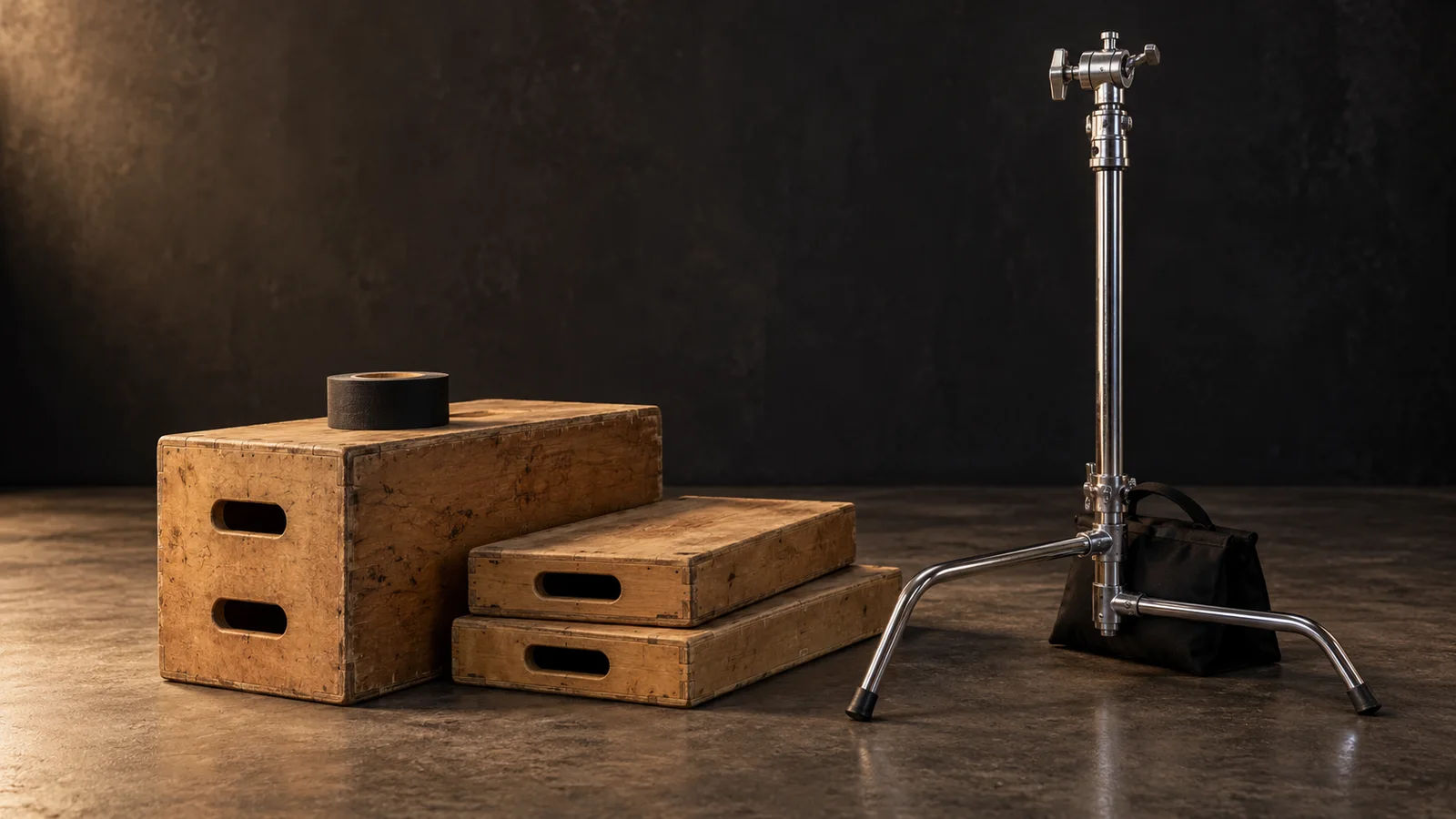
What is an apple box
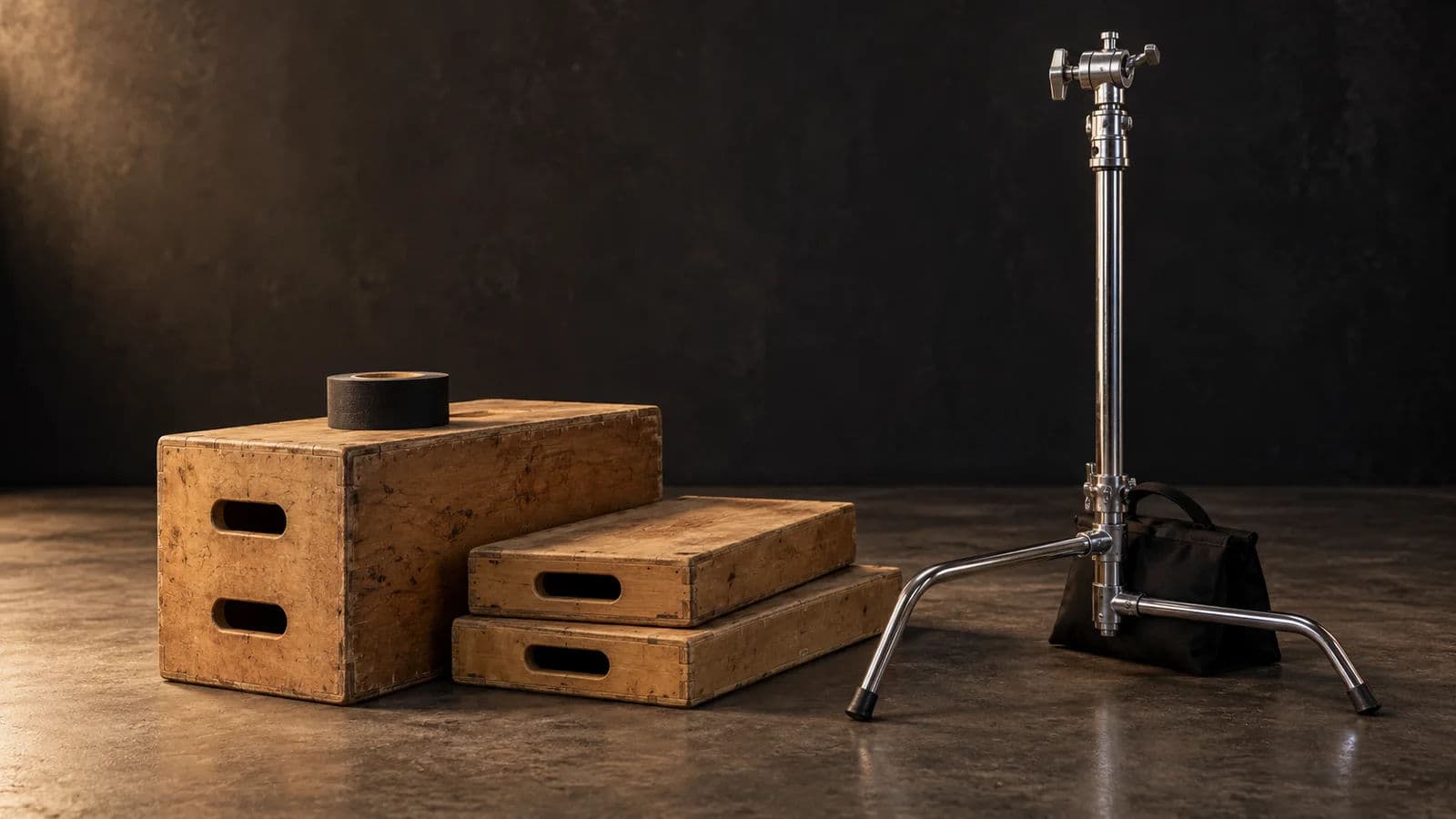
An apple box is a strong wooden box used on film sets. It can lift an actor, support a camera case, raise a lamp, or give a crew member a seat. It is simple, but that is why it is useful.
Apple boxes come in several depths. Crews often call them full, half, quarter, and pancake. Turn one on a different side and you get another height. If someone asks for a full apple, they mean the deepest box, not the size of a fruit.
Use a real apple box for weight bearing jobs. A decorative crate may split. Check that the box is sound, place it on a flat surface, and keep feet away from its edge. If an actor must stand on it, tell them first and have someone nearby.
What is a C stand
A C stand is a heavy duty stand with a sliding leg, a grip head, and an arm. Crews use it to hold flags, nets, diffusion, small lights, and other light shaping tools. The name comes from an older type of stand called a century stand.
A C stand is flexible, but it can hurt someone if it falls. Put the highest leg under the weight when the ground allows it. Add a sandbag. Tighten the grip head so gravity makes it tighter, not looser. Keep the arm out of a walkway, and do not load it beyond what the stand and head can hold.
If you are unsure, ask the grip who set it. Moving one part can change the balance of the whole stand.
What does a key grip do
The key grip leads the grip team. Grips build and support camera movement. They also rig the tools that shape light, such as flags and diffusion frames. They work closely with the cinematographer and the gaffer, but their jobs are not the same.
The gaffer leads the lighting and electrical team. The key grip handles grip work and much of the physical support around the camera and lights. On a small crew, one person may help across both areas, but the safety duties still matter.
A key grip may help rig a camera, lay track, control a large frame, or make a stand safe. The exact work changes with the production. The ScreenSkills grip guide gives a useful view of the role on a larger set.
What is gaffer tape
Gaffer tape is strong cloth tape made for short term work on sets, stages, and events. It can hold a cable flat, label a case, cover a small light leak, or mark a safe position. Good gaffer tape usually tears by hand and removes more cleanly than common duct tape.
It is not magic. Heat, dust, wet surfaces, and time can weaken it or leave residue. Test it before putting it on a painted wall, fabric, a lens, or anything valuable. Never use tape as the only support for a heavy object above people.
The name causes an easy mix up. A gaffer is the head of the lighting and electrical team. Gaffer tape is the tape. A roll of it does not make someone a gaffer.
How the four fit together
Imagine a window is making one side of an actor too bright. The cinematographer asks for diffusion. The key grip and grip team place a frame on a C stand. They weight the stand, then adjust the frame. An apple box may raise a smaller piece of material. Gaffer tape may secure a loose cable on the floor.
Each item has a small job, but the result is one controlled image. That is how set work often feels. No single tool makes the shot. A group of safe, quiet choices does.
A simple starter kit
- One sound apple box, if you can carry it safely.
- One proper C stand with a suitable sandbag.
- A small roll of good gaffer tape.
- Clamps that match the weight you need to hold.
- Work gloves for hot or rough equipment.
You do not need a truck full of gear to learn this language. Start with the tools you actually use. Learn their limits, and ask before touching a rig you do not understand.
That habit matters more than sounding experienced. Film set vocabulary is useful because it makes work faster and safer. Once everyone knows what the words mean, the crew can focus on the shot.