23 November 2026 · 5 min read
How to Write a 30 Second Short Film You Can Shoot
Build a tiny film around one clear change. Use a simple script, a practical shot list, and a thirty second edit plan that leaves room for a real ending.
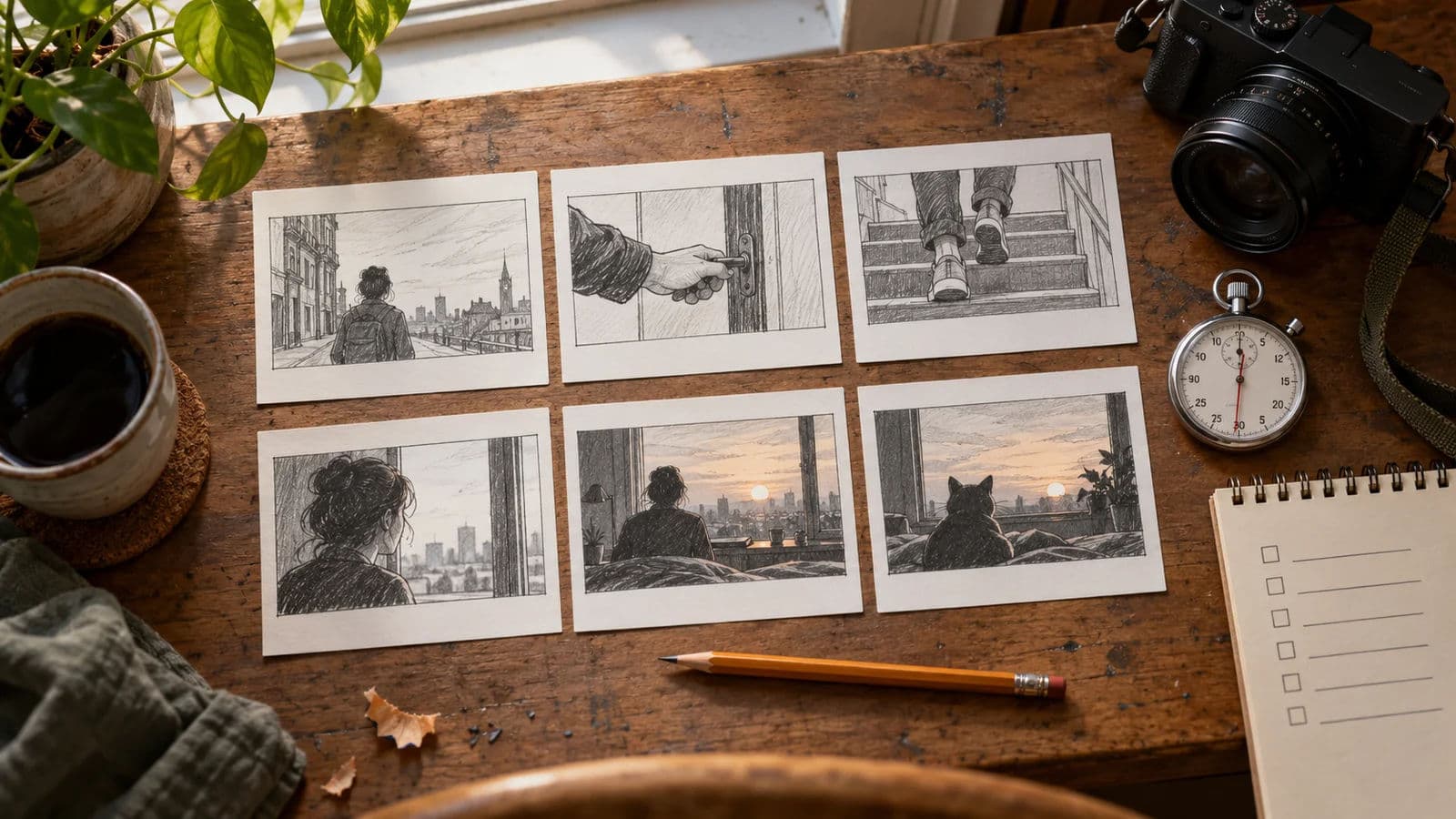
Thirty seconds can hold a story. It usually can't hold the whole backstory, three locations, and an explanation of why everything matters.
Start with one person who wants one thing. Give them a small obstacle, then let a choice change the situation.
You don't need a twist, but something should move. The person may learn, refuse, notice, lose, or decide.
Choose an action you can actually film
A person returning a key is filmable. A person finally understanding their entire childhood is harder to show in half a minute.
Look for an action with a visible result. A hand hesitates, a door stays open, a message is deleted, or a seat remains empty.
Use a location you can access and control. Choose a prop you already have. Then ask whether the sound can be recorded clearly.
These limits make the film easier to finish. They can also make the idea more specific.
A strong concept matters more than a large kit
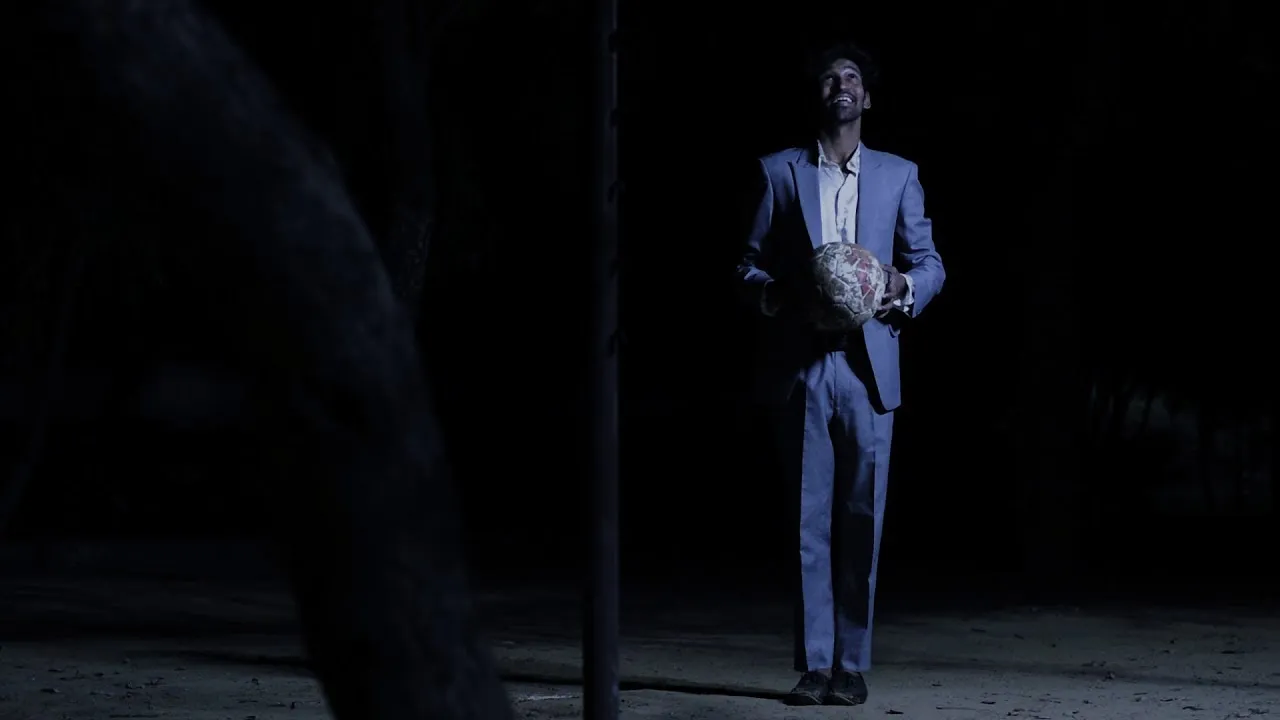
We made Humanoid with a small crew, a Nikon D3400, basic editing skills, and a strong concept.
Not every shot was perfect. We still finished a film that earned festival recognition.
That doesn't make preparation unimportant. It shows why a clear idea deserves protection when the resources are small.
For a thirty second film, protect the one action that carries the idea. Extra equipment won't help if that action is unclear.
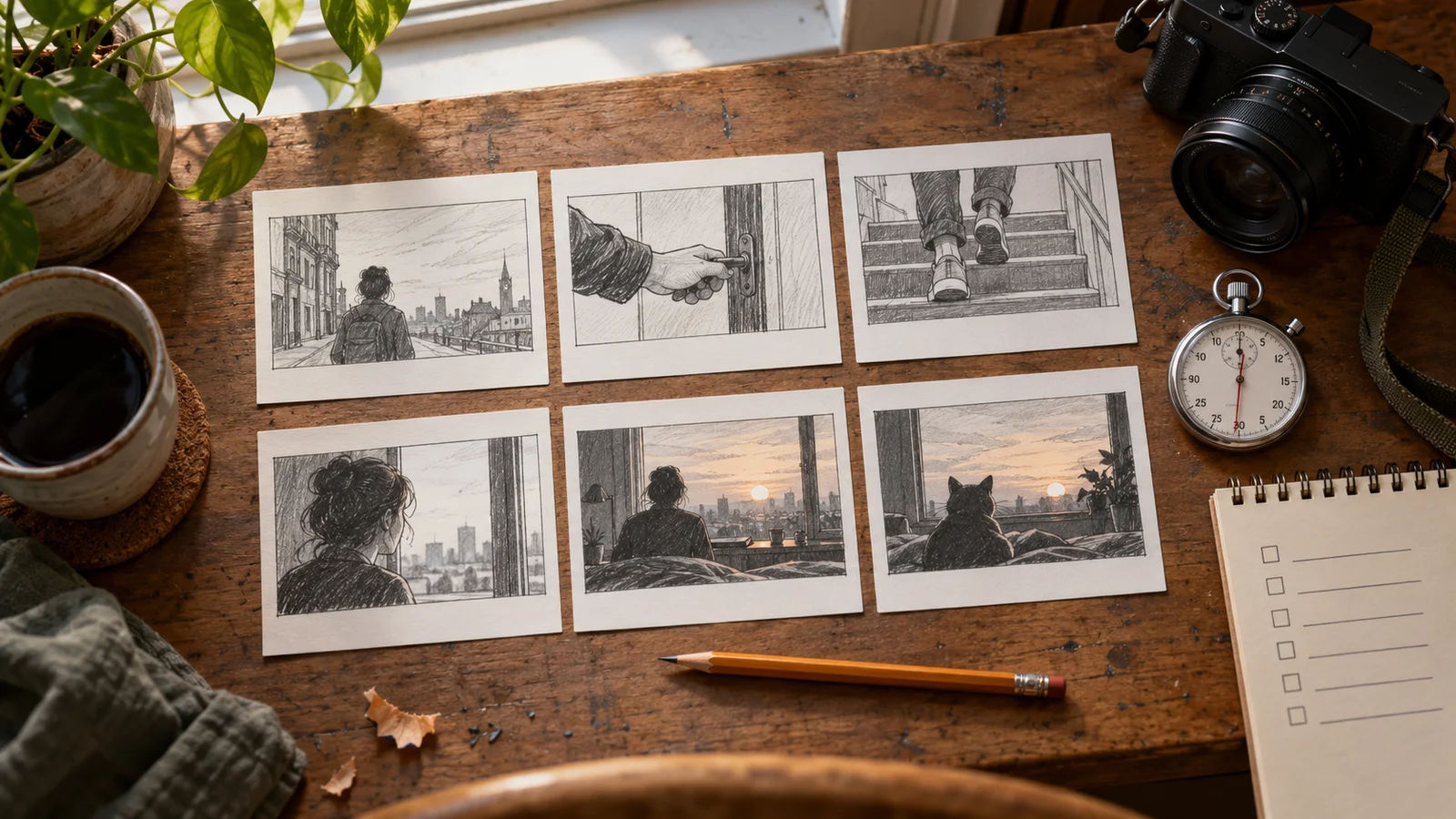
Try a story with one visible choice
Here is an original exercise called The Spare Key. One person arrives at a door to return a key.
They raise a hand to knock, then notice another key already waiting outside. They place theirs beside it and leave.
The film doesn't need to explain the whole relationship. The repeated object suggests that a decision has already been made.
You can change the meaning through performance and sound. A hurried exit feels different from a quiet, reluctant one.
Write a short script in plain actions
- An adult stops outside a closed door, holding a key.
- They take a breath and raise their hand to knock.
- Their eyes move towards a second key on the ledge.
- They lower their hand and place their key beside it.
- They leave, while the two keys remain in frame.
No line explains the feeling. The actor has a clear action, and the objects carry information.
But test it with someone who hasn't heard your explanation. If they can't follow the basic action, simplify the staging.
A little ambiguity can be interesting. Confusion about where the key went usually isn't.
Make a shot list that serves the change
You can cover this exercise with five planned views.
- A medium view establishes the person and the door.
- A close view shows the key in the hand.
- A face shot catches the discovery and hesitation.
- A detail reveals the second key.
- A held final view shows both keys after the person leaves.
Record the main action in a wider view as well. That gives you a simple version if the close shots don't join well.
Our guide to shot lists and emotion explains how to protect the important beat.
Give the thirty seconds a rough shape
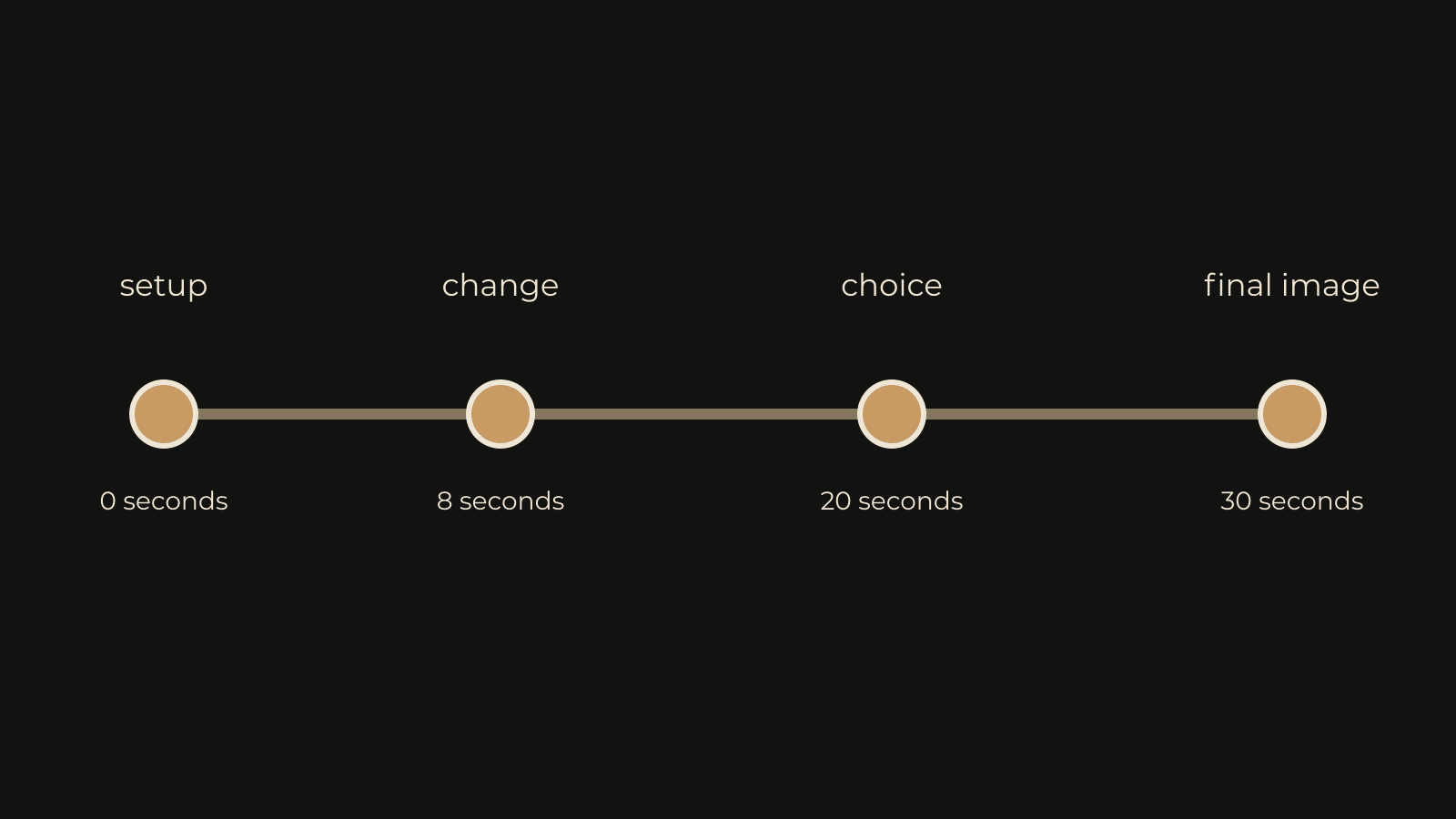
Use the first five seconds to establish the person and door. Let the raised hand and hesitation take the next five.
Allow six seconds for the discovery and reaction. Give the key placement about six more seconds.
That leaves eight seconds for the exit and final image. These are planning lengths, not instructions to cut every shot at a fixed time.
Record longer takes so that the edit has room. You can shorten a pause later, but you can't recover a performance you stopped recording.
Sound can do quiet work
Record the key touching the ledge, the clothing movement, and the footsteps. Capture a clean stretch of the hallway too.
Don't fill every second with music. The silence before a knock can make the raised hand feel important.
If dialogue isn't needed, leave it out. Fewer words give the viewer more time to read the face and action.
For a spoken version, keep one line at most. Test it aloud so that the pace remains believable.
Edit the action before decorating it
Build the film in order, then watch it without colour effects. Check that the discovery happens before the decision feels complete.
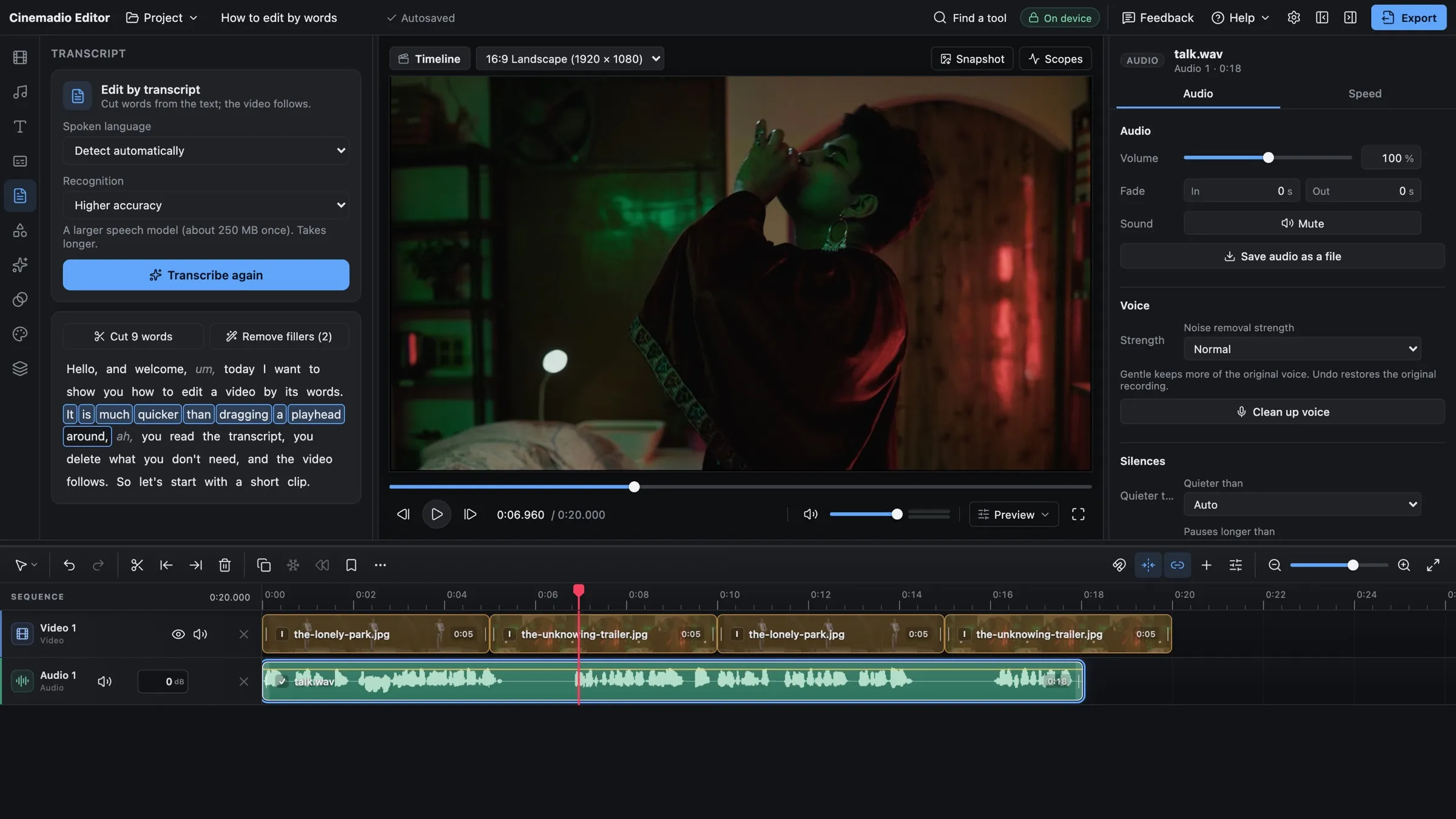
Use the Cinemadio Editor timeline to trim the action and arrange the sound. Keep the ending long enough to register.
If your version includes narration or a talking introduction, editing by transcript can help shape those words. It won't replace timing the silent performance by eye.
Then check the exact exported duration if the brief requires thirty seconds. Include any title or end card in that total.
Finish one version before expanding it
Show the film to two people without explaining it first. Ask what changed, which moment they noticed, and where they became confused.
Fix the unclear action before adding another scene. A short film grows stronger when each second has a useful job.
Start with one door, one key, and one choice. Finish that version, then decide what your next thirty seconds need.