24 October 2026 · 7 min read
How to Film a Place So It Feels Like Somewhere
A place feels real when you capture how it sounds, moves and changes, not only how it looks. Here is how we think about filming somewhere so it stays with the viewer.
There's a difference between a postcard and a place. A postcard shows you what somewhere looks like. A place makes you feel what it's like to stand there. The weather on your face. The sound underneath everything. The way people move through it without looking at the view.
Most travel video ends up as postcards. A drone shot, a sunset, a smiling face. There's nothing wrong with them. But they don't stay with you. A day later you can't remember which place was which.
So how do you film somewhere so that it stays? Here's how we think about it. It's the idea behind our journeys, and you don't need expensive gear to try it.
Start by listening
Before you lift the camera, stand still for a minute. Close your eyes if it's safe to. What can you hear? Wind. A kettle. Prayer flags snapping. Someone sweeping a step. Engines far away.
That's the sound of the place, and it's half of what you'll remember. Yet most people only think about it in the edit, when it's too late.
So record it first. Thirty seconds to a minute of ambience, with nobody talking, in each spot you plan to film. We wrote about this in our Darjeeling and Sikkim notes, where we talked about the sound of a place before the camera started. That's the feeling we mean. If you want to plan the practical side, our note on building a sound plan is a good place to begin.
Look for the small things
A wide shot tells the viewer where they are. But it's usually a small thing that tells them what it was like. Steam rising from a cup. A rope on a boat. Boots pressing into snow. A hand on a railing worn smooth by other hands.
So for every spot, try to get four kinds of shot.
- A wide, so that people understand the space.
- A medium, closer to how a person would see it.
- A detail, something small and textured.
- A person, doing something ordinary.
It's a simple ladder, and it works almost everywhere. If you want to go further, read our note on shot lists that follow emotion. It shows how to choose shots by feeling instead of by size.
And don't skip the in between moments. A road bending into mist. Waiting for a bus. Walking from one place to another. We wrote about these once as the overlooked intervals, and they're often where the real feeling lives. Nobody plans them. Therefore you have to keep the camera ready.
Put a small person in a big place
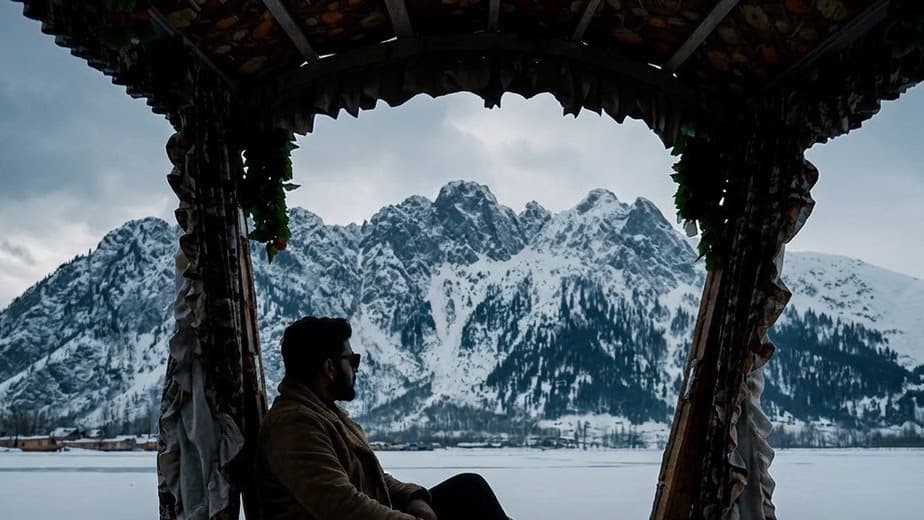
Landscapes are hard to feel. A mountain on its own is just a shape. Put a tiny figure in front of it and suddenly you understand how big it is.
That's human scale, and it's one of the oldest tricks in filmmaking. It's what we were chasing in Raw Beauty of Kashmir, a winter film about the quiet human scale inside a vast landscape.
Keep the person busy with something ordinary. Walking. Sitting. Looking at the water. They shouldn't look at the camera, and they shouldn't pose. The less they act, the more the place does the talking.
Let the weather be a character
Don't wait for perfect skies. Fog, rain, snow, wind and flat grey light all carry mood, and they're a gift if you're ready for them. A blue sky is the same everywhere. A sky that's about to break is only here, and only now.
So shoot the weather as it changes. The cloud lifting off a ridge. The first drops on a window. The light coming back after rain. If you want help shaping what's already there, read our note on using available light.
A few practical things matter more than they sound. Cold drains batteries quickly, so keep spares in an inside pocket. Carry a cover for the camera. And if the weather turns bad, don't pack up too early. That's often when the best footage arrives.
The last light of the day deserves its own attention. It changes fast, and it's easy to rush. Our short film Last Ember is a study of exactly that moment.
Let the world move through the frame
Here's a simple way to get calmer footage. Put the camera down, hold it still, and let the place move instead.
A boat drifts across. A man walks through with a bundle. Birds lift off. When the camera is steady, these small movements feel like something you discovered, not something you chased.
Hold the shot for longer than feels comfortable. Ten seconds is a good start. Most beginners cut too soon, and the shot never gets a chance to breathe. When you do move the camera, move slowly and for a reason.
Ask first, and be a guest
People are part of the place, so you'll want to film them. Be careful about how.
Ask before you point a lens at someone. A smile and a gesture are often enough. If they say no, that's the answer, and you thank them. Spend a few minutes talking before you shoot. Show them what you filmed if they're curious. In some places, like temples and homes, there are rules about cameras, so find out what they are.
It isn't only about manners. People relax when they feel respected, and relaxed people look like themselves. That's the footage you want.
Don't try to explain everything
There are two kinds of place films. One is a guide. It tells you where to go, what to eat and how much it costs. The other is a memory. It tells you what it felt like to be there.
Both are fine, but they're cut very differently. A guide needs information, so it explains. A memory needs feeling, so it trusts the image. We wrote about our Kashmir journey in exactly this spirit. It isn't a guide to the valley. It's a memory of being there, put together through image and sound. You can read more on the Kashmir journey page.
Decide which one you're making before you start. It'll change what you shoot, and it'll make the edit much easier.
Cut for feeling
When you get to the edit, a few habits help a place film breathe.
- Let sound lead. Start the next shot's sound a moment before the picture changes, so that the cut feels smooth.
- Use fewer shots and hold them longer. A place needs time to settle.
- Move between wide, close and wide again. It gives the film a pulse.
- Leave some silence. Not every second needs music.
Rhythm is a big subject. Our note on editing rhythm is about dialogue, but the idea carries over. A cut asks the audience to feel something, so choose when you ask.
A simple plan for one day
- Record ambience before you raise the camera.
- For each spot, shoot a wide, a medium and a detail.
- Find one person doing something ordinary. Ask first.
- Film the weather as it changes.
- Stay for the last light.
- Record the sound again before you leave.
That's all. It isn't complicated, but it asks you to slow down and pay attention. And that's really the secret. A place stays with the viewer when it stayed with you first.